
Civil War Rifle (signed ‘A Moseley’ on a silver plate), Hunting Pouch & Powder Horn


Civil War Rifle (signed ‘A Moseley’ on a silver plate), Hunting Pouch & Powder Horn
$3,500.00
Civil War Rifle (signed ‘A Moseley’ on a silver plate), Hunting Pouch and Powder Horn
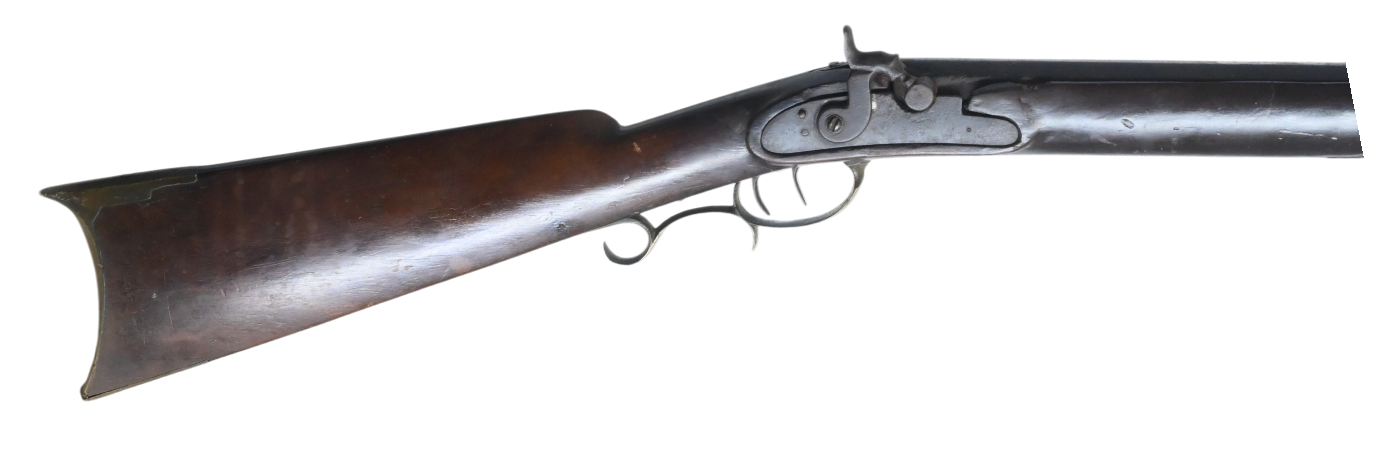
Civil War rifle, hunting pouch and powder horn that descended from Private John D. Moseley (1832 – 1866), Brunswick County, Virginia. John was a private in the Confederate Army having joined the 21st Virginia Infantry in Richmond, Virginia in 1961 with his brother Andrew J. Moseley also of Brunswick County, Virginia.
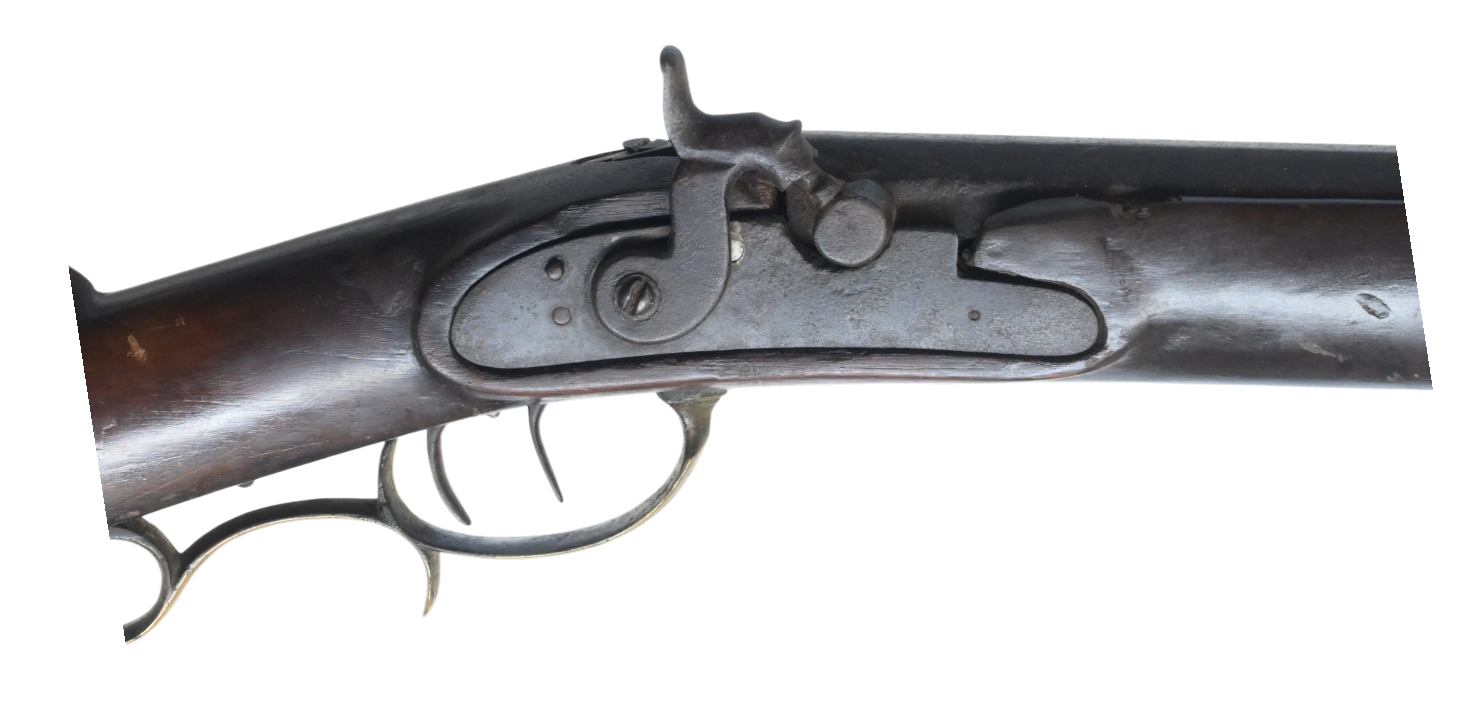
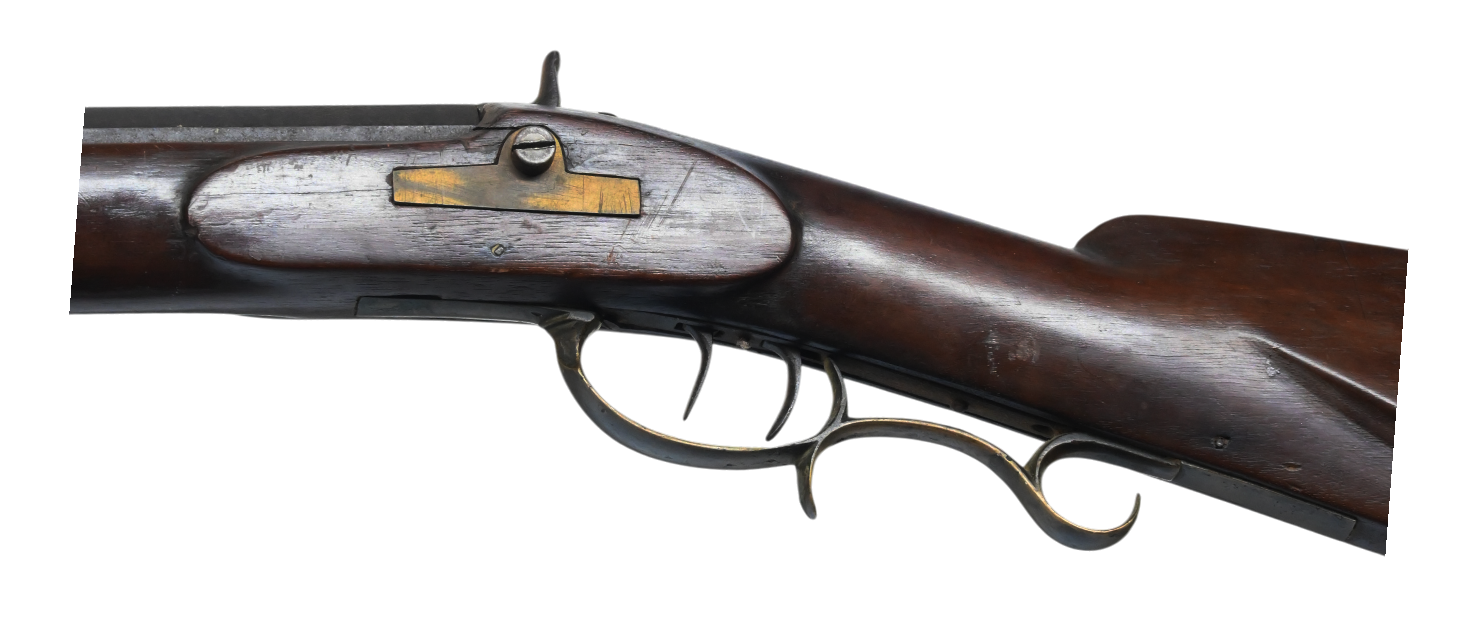
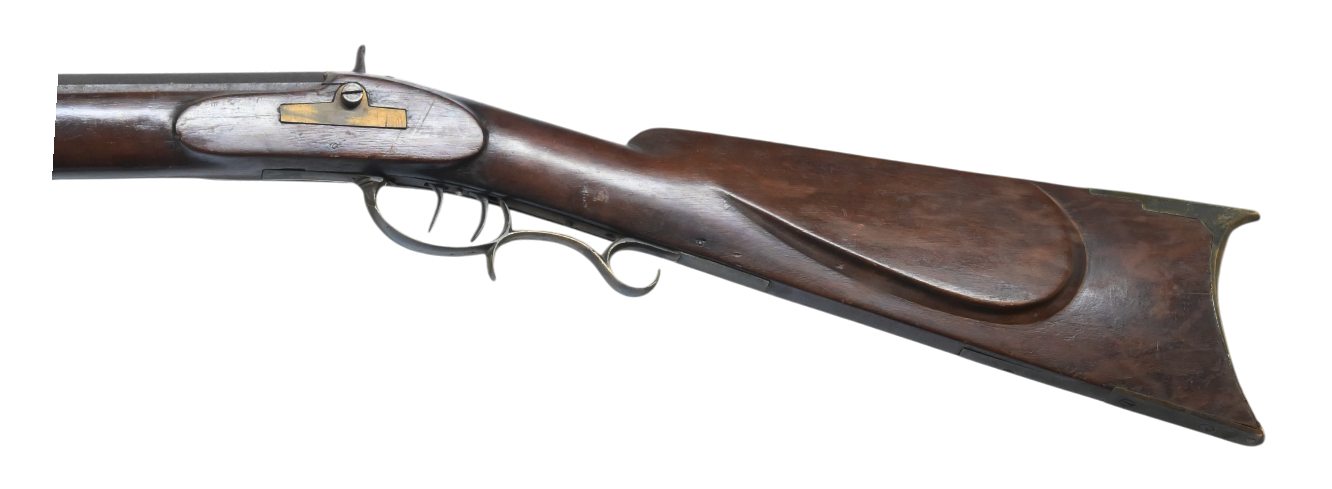
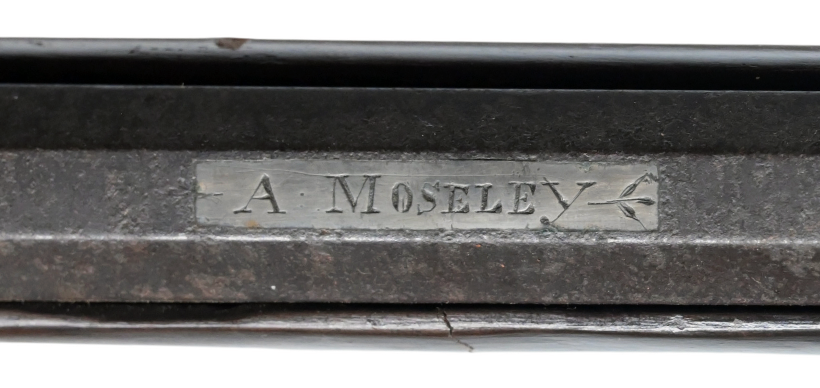
This wonderful Virginia half-stock rifle was made for John Moseley by his brother, Andrew Moseley, blacksmith and is signed ‘A Moseley’ on a silver plate on the barrel.
This beautiful rifle, while simple in design and execution exhibits the character of the weapons available to Confederate soldiers that simply grabbed the only weapon available and headed to what they believed was their patriotic duty to the CSA.
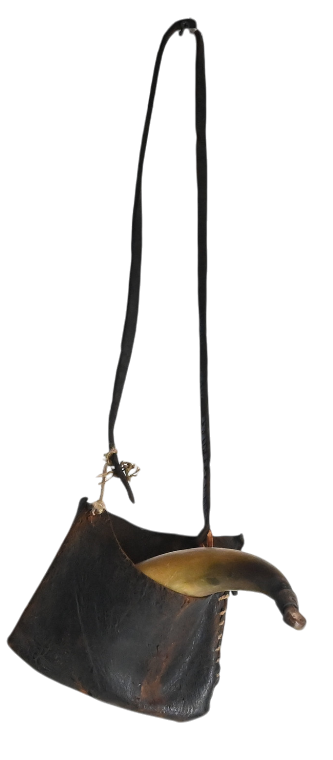
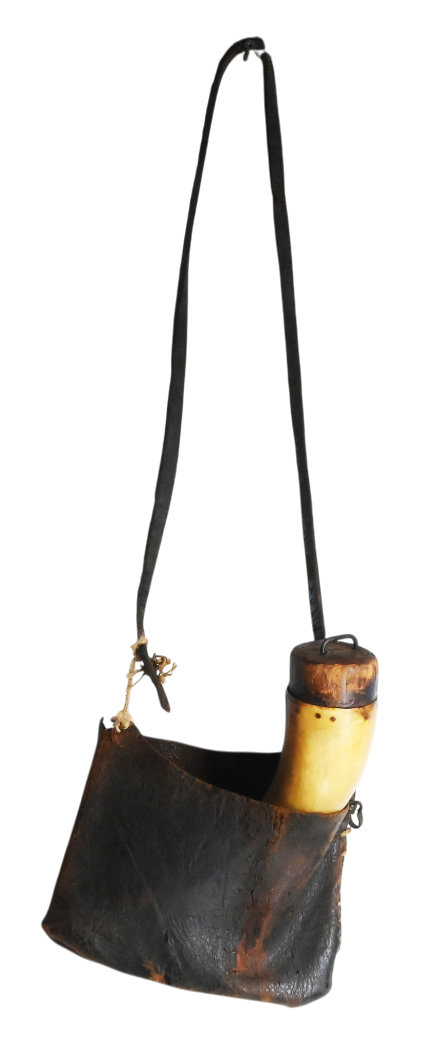
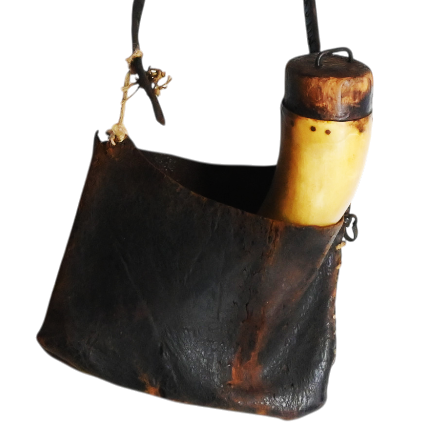
This Civil War rifle is in very good condition given its wartime journey with John Moseley. I has a beavertail chert piece, unmarked original percussion lock, brass hardware, simple sideplate, set triggers, buckhorn rear sight, silver front sight, and a brass rib with ramrod pipes under the 42” octagon barrel. The filed octagon full barrel is approximately 40 caliber with nice rifling. Overall the rifle is 58” with its original wooden ramrod. The engraving ‘A : Moseley’ followed by a flower on the silver plate found on the top flat of the barrel is in beautiful block letters and very clear. The hunting pouch and powder horn are the typical backcountry utilitarian rifle accoutrement.
A neat Civil War Virginia blacksmith / gunsmith half-stock rifle carried by a true Confederate Patriot.
By the time John D. Moseley and Andrew J. Moseley had joined the Confederate Army, their regiment was a veteran organization of 16 months service, having been originated as a militia company in December 1860 around a nucleus of well-to-do Richmond men.
That company grew rapidly as the threat of war loomed greater. Twice it was called into action due to suspected threats of attack, and it was twice shelled by Federal gunboats, prior to being formed with other companies and mustered into official service as the 21st Virginia Infantry, in June of 1861.
The remaining companies being comprised of men from Brunswick, Charlotte, Mecklenburg, Cumberland, Buckingham, Pittsylvania, Prince Edward, and Nottoway Counties in Virginia, and the City of Baltimore, Maryland.
The initial officers led by Colonel (later General) William Gilham consisted in part of Lt. Col. John M. Patton, Jr. (Great Uncle of WWII General George S. Patton, III) and the later famous publisher, as Sgt. Major, Virginius Dabney.
Like in most military units, both North and South, hard marching, unsanitary conditions, disease of epidemic proportion and insufficient commissary services immediately began to take a toll on the men. Just as the men began to toughen and to think that they had survived the worse, they were assigned in November to General Thomas J. “Stonewall” Jackson’s Brigade.
It was with this brigade, made famous by Jackson’s rapid marches up and down the Shenandoah Valley, surprising and confusing the enemy, that they became known as “Jackson’s Foot Cavalry”. Their hard marching changed to hard fighting on Sunday, March 23, 1862, where Jackson’s men met Gen. Nathan Bank’s superior force of Federal troops at Kernstown, Virginia, just 2 miles from Winchester. Here, the 21st Virginia lost 60 men, 22% of the regiment, with one officer killed and four officers wounded. Many officers were spared in this conflict as they were at the moment absent on recruiting service.
One such officer was Captain A. D. Kelly, who just three days later, on March 26, signed up John D Moseley and Andrew Jackson Moseley, and a number of their friends into service at Rock Store in Gholsonville, Brunswick County, Virginia. Given less than one week to set their personal affairs in order and bid their families good-by, the new recruits marched off to meet their new comrades on April 4th.
Their first trial by fire came on May 8th when they were involved in the Battle of McDowell on Bull Pasture Mountain. Fortunately, here and later in the Battle of Winchester, the unit suffered little harm, although in the Battle of Winchester they were under heavy artillery and musket fire for over 90 minutes.
Their next duty had them marching prisoners of war up the valley (southward) and then traveling by rail to Lynchburg. Returning to regular duty, the 21st marched northward along the eastern ridge of the mountains to Charlottesville, where they reattached to their command.
They then looped northeastward to unite with Generals Longstreet and A. P. Hill in support of General Lee’s counter-offensive style defense of Yankee Gen. George McClellan’s Peninsular Campaign in his attempt to take Richmond. Jackson’s men, now, too well equipped with guns, equipment, and clothing captured at Winchester, for once failed their well-earned reputation as “foot cavalry”, arriving late for each in the series of battles known of as the Seven Days Battles. Nevertheless, they provided the needed backup support to assure victory for the South, and because of their strenuous trek, Jackson’s men were marched back to Richmond and granted one whole day’s leave.
With a few short rests during the remainder of June and July, Jackson entered headlong into a major battle on August 9th, driving between portions of the Union Army of the Potomac at Cedar Mountain. After two hours of hard fighting, the 21st Virginia found themselves virtually surrounded by the enemy after the 1st Virginia Battalion on their left flank was routed. One officer of the 21st reported that “The enemy got in our rear (with)in thirty steps of us before we found it out.”
Regardless, according to Gen. Wm. B. Taliaferro’s official report, “The 21st Virginia Regiment, ….poured a destructive fire upon the enemy and exhibited a degree of heroic gallantry rarely ever witnessed.” With rifles empty and no time to reload, one of the rare moments of actual hand-to-hand combat followed, with the bayonet freely being used. This may have been the 21st’s finest hour, but also, the most tragic, with a 50% casualty rate including the loss of their Lt. Col., Richard Cunningham. Needless to say, the unit fell apart under the tremendous pressure and many men were captured, some of them reportedly being killed after their surrender. John and Andrew escaped.
For John and Andrew Moseley and their surviving comrades, this was a prelude for things to come. On the 30th of August, in what was to become known as Second Manassas, the 21st Virginia was being held in reserve due to the lack of ammunition. About 4:00 pm, the Federals stormed their position and the regiment was ordered to charge with empty guns.
Using a railroad cut as natural fortifications, and with only bayonets, rocks and rifles as clubs, they drove back the charge. Two days later, the 21st fought in the nearby Battle of Chantilly in a thunderstorm with torrential rain. With this the 21st VA headed toward Maryland and the Battle of Sharpsburg. Andrew, with John headed toward the hospital in Richmond, Va., and hospitals there disabled from wounds. It is not known which of the battles he was wounded in, as the first record shows him in Richmond on September 4th, 1862.
Returning to Richmond as required, records show both John and Andrew debilitated and hospitalized until early 1863. On March 23rd,,was detailed by special orders from the Adj. & Inspector General’s Office, CSA to work in Tredegar Iron Works for the remainder of the war where he applied his trade as blacksmith skills. , Andrew assisted in the manufacture of Cannon, weapons, and other equipment for the Confederacy.
Whether by nature of injury or due to special skill it is not known, but about this time, John, was detailed to work in a government shoe factory in Richmond.
In Richmond, both Andrew and John were assigned to Company C, 6th Battalion of Local Defense, (later consolidated with the 2nd Battalion, forming the 2nd Regiment Infantry, Local Defense) which was made up of detached military and civil servants for the protection of the Capital City.
This force drilled regularly, and served local military needs as arose, but were fortunate in only being called into a couple of minor alarms on the outskirts of the city.
Their last assignment, however, was that of evacuating Richmond on that fateful day of April 3rd, 1865 when General Lee began his retreat to Appomattox. Both Andrew and John returned to Brunswick County after the war.
Private John D Moseley, CSA
John married Mary Jane Barner (1829–1871) and had one child, Mary Jane Moseley (1865–1936). John never recovered from his wound as he passed away on October 27th, 1866.
His Civil War rifle, made for him by his brother, Andrew Moseley (blacksmith) descended through his family to Nellie Jewel Baggett Edwards of Emporia, Virginia.
Private Andrew J. Moseley, CSA
After the War, Andrew and wife, Caroline, returned to civilian life during the fateful period of Reconstruction. Life became a struggle in Brunswick County, Virginia for Andrew.
Sometime before1900, Andrew had again gathered up his children and started afresh; this time in the community of Paschal, NC, where he again opened a blacksmith shop.
Not to be a widower long, he once again married, this time to a young widow herself, Annie Perkinson Williams, with two young children, Rosa Ann and John Robert Williams.
Together, they had two more children, Macon Gibbons in 1904 and Herbert Glen in 1906. On February 21st , 1908, at the age of 76, Andrew Jackson Moseley passed away.
Provenance:
John D. Moseley, CSA
Through the Moseley Family to descendent Nellie Jewel Baggett Edwards of Emporia, Virginia.
Jim Webb, Hillsville, Virginia
Tom Bucher, Winchester, Virginia
Gordon Barlow, Swoope, Virginia




Reviews
There are no reviews yet.